 Shadow Archive
Introduction
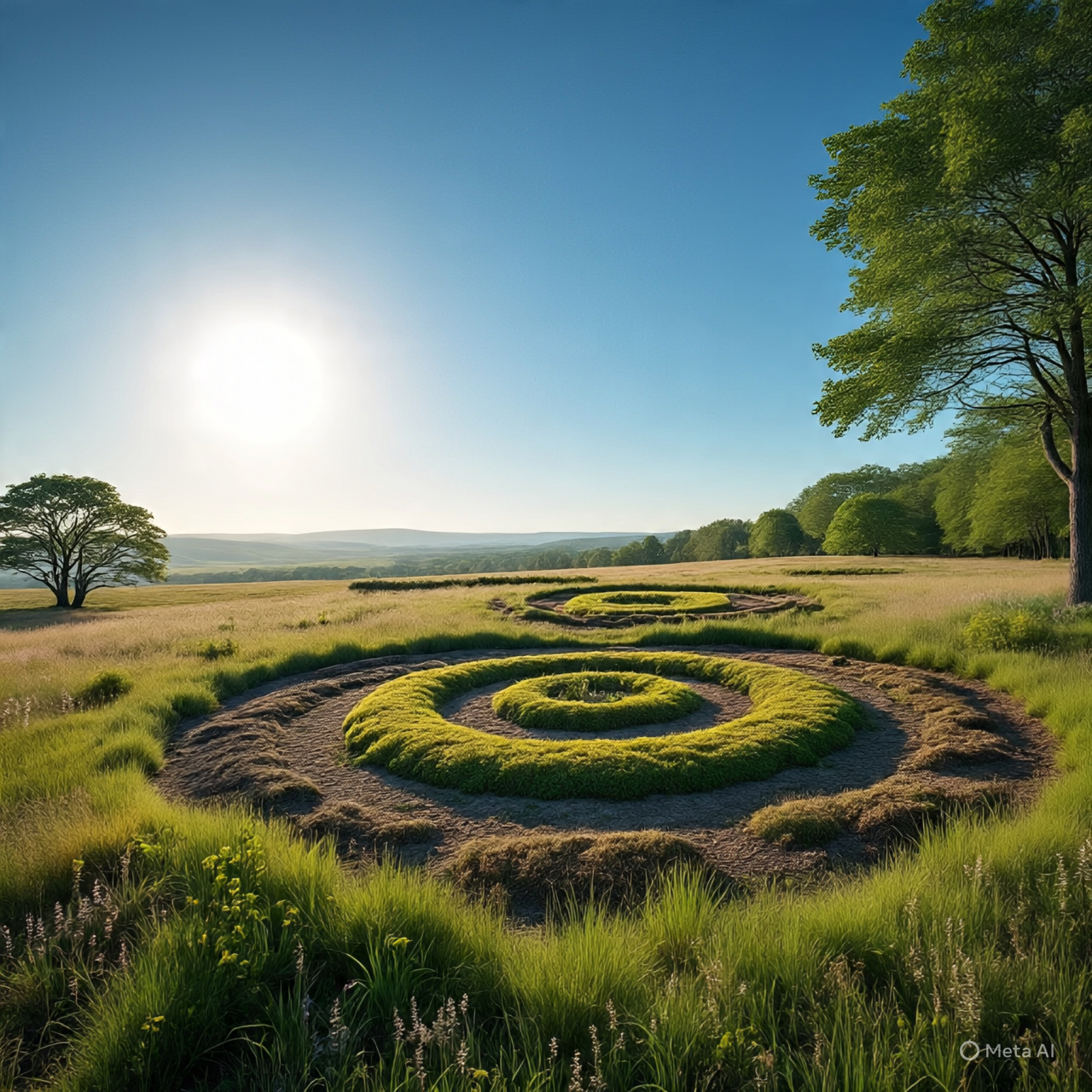
Stretching across the arid grasslands of the Namib Desert are millions of circular, barren patches of earth, surrounded by rings of tall vegetation. Known as "Fairy Circles," these formations range from 2 to 15 meters in diameter and cover an area of roughly 2,000 kilometers. For nearly a century, scientists have debated their origin, offering theories ranging from termites to toxicity, yet no single explanation has satisfied the scientific community.
Historical Context
The local Himba people have long known of the circles, believing them to be the footprints of the gods or areas poisoned by the breath of a subterranean dragon. Scientific interest began in the 1920s, but it wasn't until the 1970s that formal research attempted to unlock their secrets. The circles display a remarkable mathematical regularity, often forming a hexagonal pattern similar to a honeycomb.
Discovery & Documentation
While originally thought to be unique to Namibia, similar patterns were discovered in the Pilbara region of Western Australia in 2014. This finding shifted the debate, suggesting that the mechanism behind the circles serves a universal ecological function rather than being a localized quirk of the Namibian soil.
Theories & Investigations
The scientific debate is primarily divided into two camps:
- The Termite Theory: Proposed by biologist Norbert Jürgens, this theory suggests that sand termites (Psammotermes allocerus) create the circles by eating the roots of grasses to store water in the soil, creating a reservoir for themselves and allowing the surrounding grass to thrive.
- The Self-Organization Theory: Supported by ecologists like Stephan Getzin, this theory argues that the circles are a result of plant competition for scarce water. The "scale-dependent feedback" causes plants to organize into patterns to maximize resource reaching, similar to how spots form on a leopard.

Unanswered Questions
Despite robust models for both theories, holes remain in each argument. Termites are not always found in every circle, particularly in the Australian examples. Conversely, the self-organization models sometimes fail to account for the full lifecycle of a circle, which can last for decades before vanishing. A recent 2022 study suggested a combination of both factors might be at play, but a definitive consensus remains elusive.
Sources
- Science Journal Articles (2013, 2017).
- University of Hamburg Ecological Studies.
- Proceedings of the National Academy of Sciences (PNAS).
Disclaimer
This article summarizes current scientific research. While theories exist, the definitive cause of the Fairy Circles is still a subject of active academic debate.