 Shadow Archive
Introduction
In the last stall of a school bathroom, a voice asks a simple question: "Red paper or blue paper?" This seemingly innocent query masks one of Japan's most persistent and widespread urban legends—Aka Manto (赤マント), or "Red Cape." For decades, Japanese schoolchildren have whispered about this malevolent spirit, creating a legend that has remained remarkably consistent across generations and regions, demonstrating the enduring power of confined-space folklore.
Historical Background
Aka Manto's origins can be traced to pre-World War II Japan, with documented references appearing in the 1930s. However, the legend truly flourished in the post-war period and has continued to evolve through the present day, making it one of the longest-running modern Japanese urban legends.
The legend is part of a broader category of toire no Hanako-san (toilet ghost) stories in Japanese folklore. School bathrooms, particularly older facilities with individual stalls, became focal points for supernatural tales. These spaces—private yet public, necessary yet avoided—created perfect psychological conditions for folklore to thrive.
The Legend
The most common version of the Aka Manto legend follows a consistent pattern:
A person enters a school bathroom, typically in the evening or when alone. While using the last stall, they hear a mysterious voice asking: "Do you want red paper or blue paper?" (or in some versions, "red cape or blue cape?").
The question is a trap—there is no safe answer:
- If you answer "red": You will be slashed or strangled until your clothes are stained red with blood.
- If you answer "blue": You will be strangled or drained of blood until your skin turns blue.
- If you ask for a different color: You will be dragged to the underworld or killed in a manner associated with that color.
- If you don't answer: The spirit may leave you alone, though some versions say silence also leads to death.
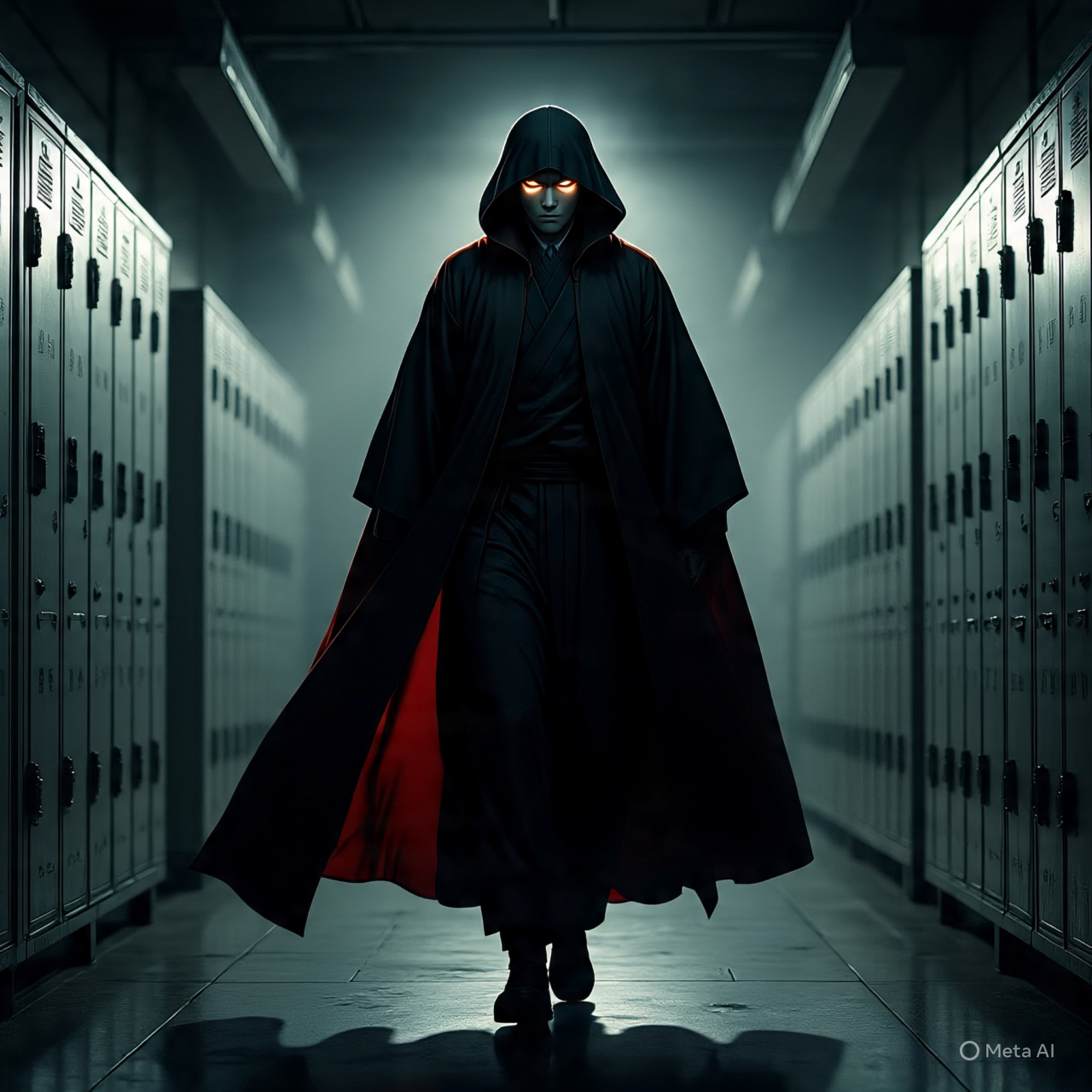
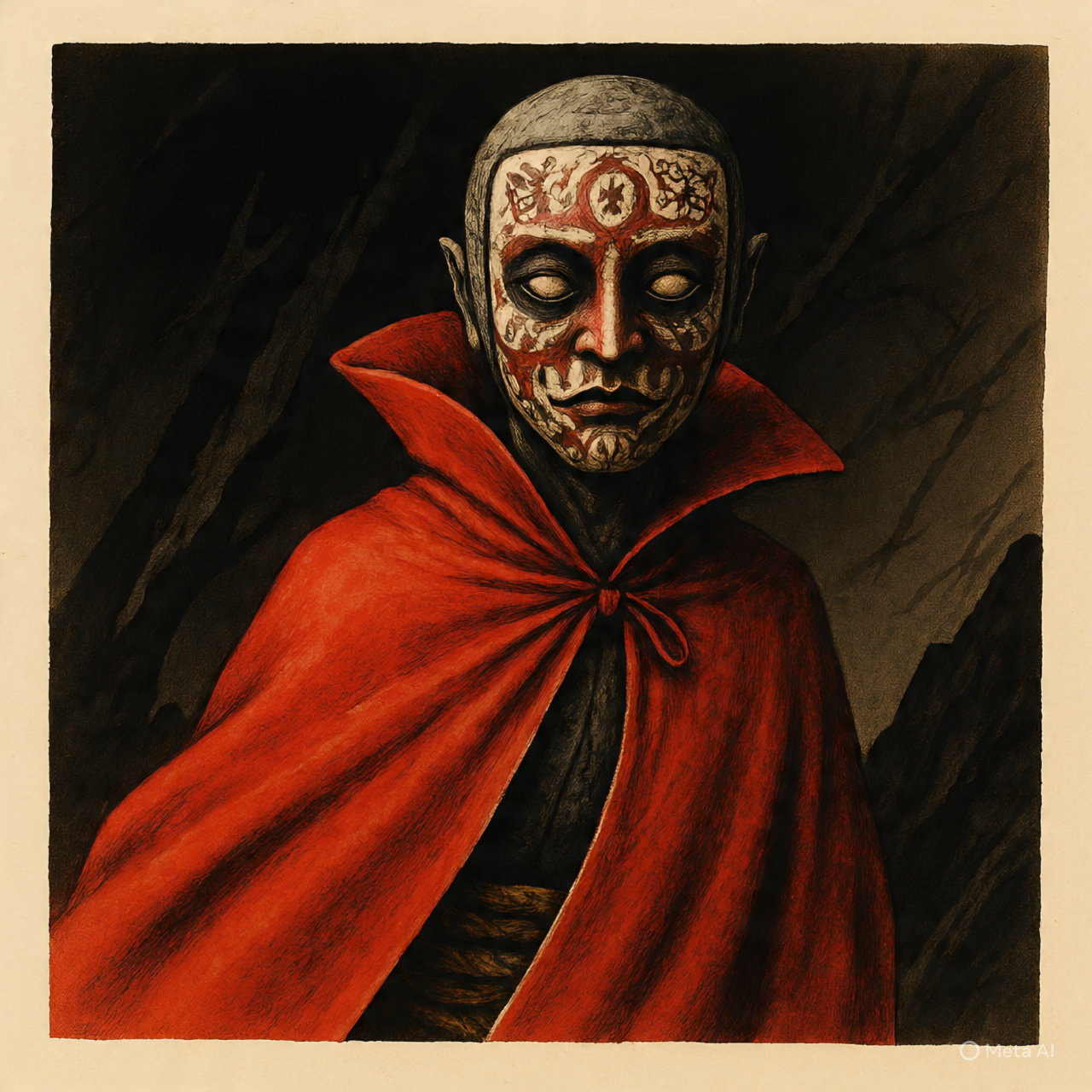
The entity is sometimes described as a handsome man wearing a red cape or mask, though in many versions, the spirit remains invisible, known only by its voice.
Pre-War and Post-War Versions
The legend has evolved significantly over time while maintaining core elements:
Pre-War (1930s-1940s): Early versions often featured a mysterious man in a red cape who would appear near schools or public bathrooms. The "paper" element was less prominent, and the figure was more of a general threatening presence.
Post-War (1950s-1980s): The legend became more structured, with the "red or blue paper" question becoming standardized. This period saw the story firmly establish itself in school culture, with consistent retellings across different regions of Japan.
Modern Era (1990s-Present): The legend has adapted to modern school facilities while maintaining its core narrative. Internet culture has spread the story internationally, and it has been incorporated into various media, from horror films to video games.
Despite these variations, the fundamental elements—the bathroom setting, the impossible choice, and the fatal consequences—have remained remarkably stable for nearly a century.
Connection to Japanese Yōkai Traditions
Aka Manto represents a modern evolution of traditional Japanese yōkai (supernatural entities) and shares characteristics with several folkloric traditions:
- Toilet Spirits: Japanese folklore has long featured bathroom-dwelling spirits, reflecting the cultural significance of these liminal spaces. The kawaya-gami (toilet god) and various toilet ghosts predate modern legends.
- Question-Asking Spirits: Many traditional yōkai pose riddles or questions to their victims, a pattern Aka Manto follows. This tests the victim's wit and creates narrative tension.
- Color Symbolism: Red and blue have deep significance in Japanese culture. Red is associated with blood, passion, and danger; blue with death, sadness, and the supernatural.
- School-Based Yōkai: As schools became central to Japanese life in the modern era, they naturally became new habitats for supernatural entities, continuing the tradition of place-specific spirits.
How the Story Spread
Aka Manto's persistence across decades can be attributed to several factors:
- Universal Setting: Every school has bathrooms, making the story immediately relatable and localizable to any student's experience.
- Oral Tradition: The story is simple enough to remember and retell accurately, ensuring consistent transmission across generations.
- Rite of Passage: Sharing and hearing the story became a social ritual, marking entry into school culture and testing courage.
- Media Reinforcement: The legend has been featured in children's horror story collections, television programs, and films, giving it cultural legitimacy.
- Adaptability: The core story adapts easily to different school environments while maintaining its essential elements.
Cultural Impact
Aka Manto has become a cultural touchstone in Japan, representing school-based folklore at its most enduring. The legend has:
- Appeared in numerous Japanese horror films, including dedicated movies about the legend
- Been featured in manga, anime, and video games as a recognizable supernatural entity
- Inspired academic studies on urban legends and childhood folklore
- Spread internationally through Japanese cultural exports and internet sharing
- Remained active in Japanese school culture, with contemporary students still sharing the story
The legend's longevity—spanning nearly a century—makes it one of the most successful modern urban legends in Japanese culture.
Psychological Explanation of Confined-Space Fear Folklore
Psychologists and folklorists have analyzed why bathroom-based legends like Aka Manto are so powerful and persistent:
- Vulnerability: Bathrooms are spaces where people are physically vulnerable and cannot easily escape, creating natural anxiety.
- Privacy and Isolation: Bathroom stalls isolate individuals from the group, triggering primal fears of being alone and unprotected.
- Liminal Space: Bathrooms exist between public and private realms, creating psychological ambiguity that folklore often exploits.
- Taboo and Discomfort: Cultural taboos around bodily functions create psychological tension that can manifest as supernatural fear.
- Childhood Anxiety: For children, school bathrooms can be sites of bullying, embarrassment, or fear, and folklore provides a framework for expressing these anxieties.
- Control and Powerlessness: The impossible choice in the legend reflects childhood feelings of powerlessness in the face of adult rules and social expectations.
The legend serves as a safe way for children to explore fears about vulnerability, isolation, and making choices with unknown consequences—all relevant to the school experience.
Current Status
Aka Manto remains active in Japanese school culture today. Contemporary students continue to share the legend, though it now competes with digital entertainment and new forms of storytelling. The legend has successfully transitioned to the internet age, appearing in creepypasta collections and digital horror content.
The story's remarkable consistency across nearly a century demonstrates the enduring power of well-crafted folklore. It continues to serve its traditional functions: entertaining, frightening, creating social bonds, and helping children process anxieties about school life and growing up.
Sources
- Foster, Michael Dylan. Pandemonium and Parade: Japanese Monsters and the Culture of Yōkai (2009).
- Komatsu, Kazuhiko. An Introduction to Yōkai Culture: Monsters, Ghosts, and Outsiders in Japanese History (2017).
- Reider, Noriko T. Japanese Demon Lore: Oni from Ancient Times to the Present (2010).
- Tucker, Elizabeth. Haunted Halls: Ghostlore of American College Campuses (2007) - comparative analysis.
- Japanese folklore collections documenting school-based legends (various, 1950s-present).
- Academic studies on childhood folklore and urban legend transmission in Japanese schools.
Disclaimer
This story is presented as cultural folklore and urban legend. There is no verified evidence of supernatural entities in school bathrooms. Shadow Archive presents this as a study in folklore persistence, cultural storytelling, and the psychology of childhood fears, not as proven fact.
General Disclaimer: This website is intended for educational and informational purposes only. All content is based on publicly available sources and academic research.